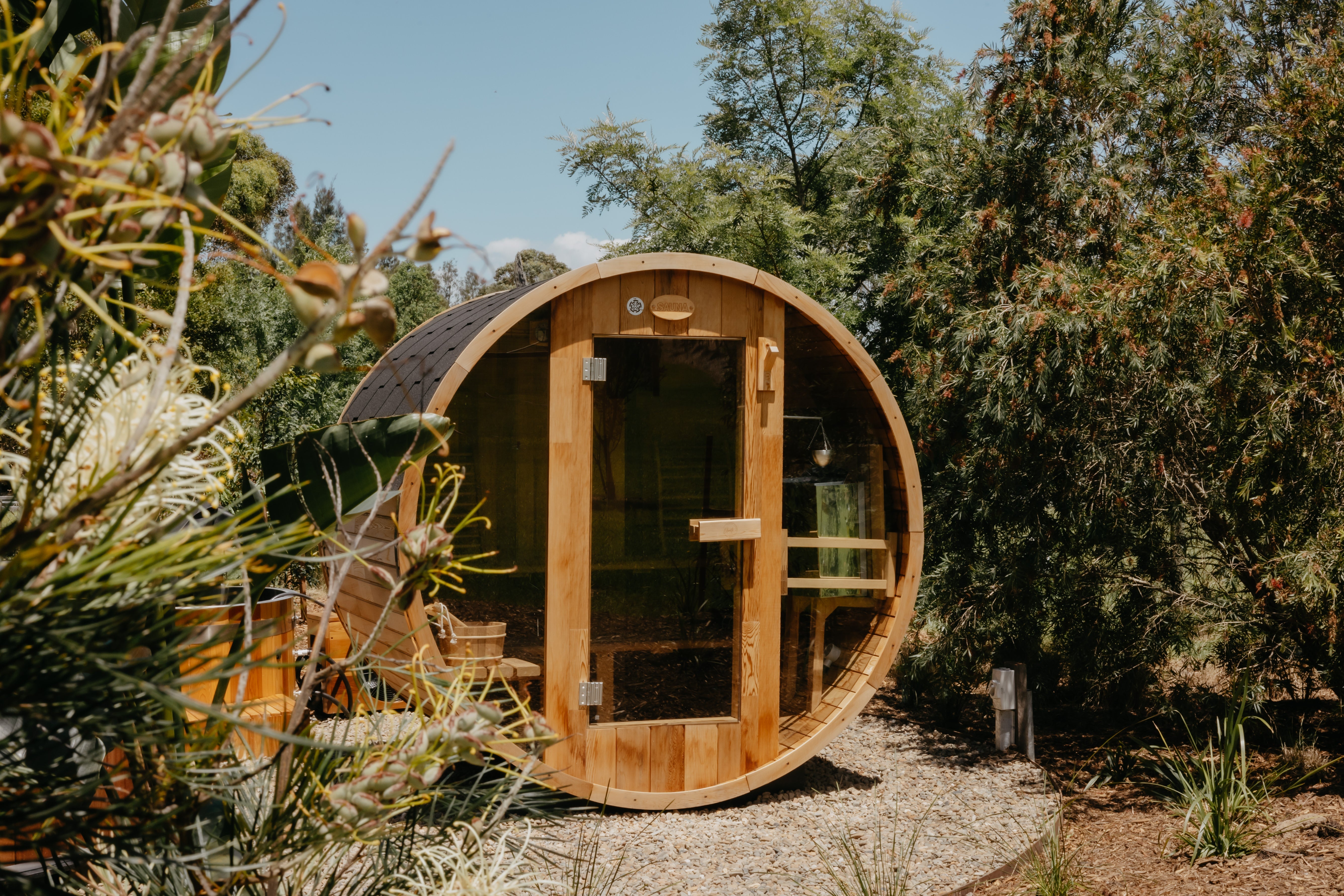


How Much Does a Sauna Cost in Australia in 2026? The Complete Outdoor Sauna Buying Guide
Buying a sauna is a very different decision from buying a piece of gym equipment.
For most Australians, an outdoor sauna is a significant investment — something that will sit in your backyard, become part of your routine and hopefully give you years of enjoyment.
So naturally, one of the first questions people ask is:
How much does a sauna actually cost in Australia?
The honest answer is:
It depends.
A home sauna can range from a relatively simple, compact unit to a premium outdoor sauna with quality timber, a high-performance heater, professional installation and additional electrical or site preparation costs.
Australian cost guides currently put the broad installed price of home saunas at around $3,000 to $13,000+, with traditional saunas generally sitting higher than entry-level infrared models and custom-built saunas potentially costing considerably more.
But the headline price isn't the whole story.
If you're seriously considering a sauna, the better question is:
“What will it actually cost me to have a quality sauna installed and ready to use in my backyard?”
This guide breaks down the real costs, what you should look for, where you can save money, and what you shouldn't compromise on.
How much does an outdoor sauna cost in Australia?
As a broad guide, you can expect to encounter three very different price categories.
Entry-level saunas
You may find smaller or simpler sauna products from around $3,000–$6,000, particularly among infrared and compact models.
These can be attractive if budget and space are your primary considerations.
Quality traditional outdoor saunas
A well-built traditional cedar sauna will commonly sit in the $7,000–$12,000+ range depending on size, timber, heater, design and inclusions.
For example, Elevate's current traditional cedar range starts at $7,990 for the Urban 2–4 Person and extends through larger models such as the Deluxe 4-6 Person model from $10,790.
Custom-built saunas
At the premium end, custom-designed or architecturally integrated saunas can cost $15,000–$20,000+, particularly once construction, bespoke finishes and professional trades are included.
So when someone asks:
“What's the average price of a sauna?”
the answer doesn't tell you very much.
The better question is:
What kind of sauna experience are you trying to create?
What determines the price of a sauna?
There are seven major things that influence what you'll pay.
1. Sauna type
The first decision is whether you want:
-
Traditional sauna
-
Infrared sauna
-
Custom-built sauna
Traditional and infrared saunas work differently and provide a different experience.
Traditional vs infrared sauna
A traditional sauna heats the surrounding air using an electric heater and sauna stones.
You can then add water to the heated stones to create steam and change the humidity and sensation inside the sauna.
Traditional Finnish-style sauna typically operates at significantly higher temperatures than infrared sauna.
Infrared saunas use infrared heating elements and generally operate at lower ambient temperatures.
Neither is automatically “better”.
It comes down to the experience you're looking for.
Choose traditional if you want:
-
Classic sauna heat
-
Higher temperatures
-
Sauna stones
-
The ability to create steam
-
A traditional Finnish-style experience
-
A more immersive outdoor sauna environment
-
A sauna that works naturally as part of contrast therapy
Consider infrared if you want:
-
Lower operating temperatures
-
A different style of heat
-
Potentially faster warm-up
-
A compact indoor setup
-
A lower-temperature sauna experience
If you're specifically looking for the classic sauna experience — sitting in high heat, pouring water over stones and creating bursts of steam — traditional sauna is the obvious choice.
That's why Elevate focuses on traditional outdoor cedar saunas rather than trying to be everything to everyone.
2. The size of the sauna
Size is one of the biggest factors in the price.
But there's an important distinction:
Maximum capacity isn't the same as comfortable capacity.
A sauna advertised as a four-person sauna doesn't necessarily mean four people will have enough room to stretch out comfortably.
Think about how you'll actually use yours.
1–2 people
Ideal for:
-
Couples
-
Solo sauna sessions
-
Smaller backyards
-
People who primarily want recovery and relaxation
2–4 people
A great middle ground for:
-
Couples
-
Small families
-
Regular shared sessions
-
People who want more room without a huge footprint
Elevate's Urban 2–4 Person, for example, has a compact 1.5m × 1.8m footprint while providing a traditional sauna environment.
4–6 people
Better for:
-
Families
-
Entertaining
-
Larger backyards
-
People who like to lie down during sauna sessions
-
A more spacious experience
Elevate's Urban Retreat measures approximately 2.3m × 1.8m and is designed around a larger, roomier interior.
3. The timber
If you're buying an outdoor sauna, timber matters.
Your sauna is going to experience:
-
Heat
-
Moisture
-
Rain
-
Sun
-
Temperature changes
-
Humidity
That's why the construction material shouldn't be treated as an afterthought.
Why cedar?
Canadian Western Red Cedar has long been popular for sauna construction because of its durability, stability, appearance and characteristic aroma.
Elevate uses Canadian Western Red Cedar, with current models using approximately 38mm-thick cedar components.
Cedar also gives a traditional sauna something that photographs can't really capture:
the smell.
Walk into a good cedar sauna and you immediately know you're somewhere different.
Warm timber.
Natural aroma.
High heat.
It's part of the experience.
4. The heater
The heater is arguably the most important piece of equipment in the sauna.
A beautiful cedar structure won't make a great sauna if the heater is poorly matched to the space.
When comparing saunas, look at:
-
Heater brand
-
Heater power
-
Sauna volume
-
Controls
-
Sauna stones
-
Electrical requirements
-
Replacement parts
-
Warranty
Elevate's current traditional range uses Harvia electric heaters, with models including 4.5kW, 6kW and 8kW configurations depending on sauna size.
The heater should be correctly matched to the sauna.
Bigger isn't automatically better.
5. Glass, benches and hardware
These details can make a surprising difference to both price and experience.
Compare:
Glass
Is it tempered?
How large is the glass area?
Does it let natural light into the sauna?
Benches
Are they comfortable?
Can you lie down?
How wide are they?
What timber are they made from?
Hardware
Look at:
-
Hinges
-
Bands
-
Fasteners
-
Door handles
-
Roof components
-
Support cradles
These aren't the exciting parts of buying a sauna.
But they're the parts you'll still care about years later.
6. Design and features
Two saunas with the same capacity can have very different prices.
You might be choosing between:
-
Barrel or cabin
-
Front porch or no porch
-
Rear window
-
Full glass front
-
Larger benches
-
Wi-Fi heater controls
-
Premium finishes
-
Different roof designs
-
Interior lighting
For example, Elevate's current range includes compact Urban models, larger Urban Retreat and Urban Max models, Outlook, Cove models and Deluxe configurations.
The question isn't:
“What's the cheapest sauna?”
It's:
“Which features will I actually appreciate every week?”
7. Installation and site preparation
This is where buyers sometimes get caught out.
You might see a sauna advertised for $8,000 and assume that's the total cost.
It may not be.
Depending on your property, you may also need to budget for:
-
Electrical work
-
Base preparation
-
Delivery considerations
-
Assembly
-
Landscaping
-
Drainage
-
Council or planning considerations where applicable
This doesn't mean installation has to be expensive.
It means you should understand the complete picture before you order.
What does electrical installation cost?
Traditional electric saunas require an appropriate electrical connection.
The exact requirements depend on the heater and installation.
Elevate's current guidance indicates typical requirements of approximately:
| Heater | Typical electrical requirement |
|---|---|
| 4.5kW | 20 amp, single phase |
| 6kW | 32 amp, single phase |
| 8kW | 40 amp, single phase |
These are indicative requirements; your electrician should confirm the appropriate circuit, cabling and connection for your specific installation.
The important part:
Use a licensed electrician.
Don't attempt to wire a sauna heater yourself.
And ideally, talk to your electrician before purchasing.
Why?
Because the distance from your switchboard to the sauna, your existing electrical capacity and the required circuit can all affect the final installation.
How much does it cost to run a sauna?
This is another question every buyer should ask.
The good news is that sauna electricity use is easier to understand than it sounds.
The basic calculation is:
Heater power × hours of operation × electricity rate = approximate electricity cost
For example, if a 6kW heater were operating at its full rated output for one hour:
6kW × 1 hour = 6kWh
Multiply that by your electricity tariff to estimate the energy cost.
But there's an important caveat.
A sauna heater doesn't necessarily draw its maximum rated power continuously throughout an entire session.
Once the sauna reaches temperature, the heater cycles to maintain the desired temperature.
So actual electricity consumption will depend on factors such as:
-
Heater size
-
Sauna insulation
-
Outdoor temperature
-
Starting temperature
-
Target temperature
-
Session length
-
How often the door is opened
-
How frequently you use the sauna
This is why a blanket claim such as “a sauna costs exactly $X per session” can be misleading.
How much should you budget beyond the sauna itself?
A useful way to think about the purchase is:
The sauna
$7,000–$12,000+ for many quality traditional outdoor options.
Electrical
Potentially an additional cost depending on the existing electrical infrastructure and the electrician's work required.
Base
Potentially $0 if you already have an appropriate base, or significantly more if you need to construct one.
Installation
You may assemble the sauna yourself if the model is designed for DIY assembly and you have the appropriate skills and assistance.
Professional installation is another option.
Landscaping
Optional — but this is where the project can become much more beautiful.
Think:
-
Decking
-
Outdoor shower
-
Garden
-
Lighting
-
Privacy screening
-
Cold plunge
Accessories
Some sauna packages include most of what you need.
Others require you to purchase:
-
Heater
-
Stones
-
Bucket
-
Ladle
-
Thermometer
-
Lighting
-
Controls
Always compare the complete package, not just the advertised starting price.
What does a complete sauna package look like?
This is one area where it's worth looking closely at the inclusions.
For example, Elevate's Cove 4 Person sauna currently includes:
-
Canadian Western Red Cedar construction
-
38mm timber
-
6kW Harvia heater
-
Tempered glass door
-
Stainless steel hardware
-
Interior light
-
Flooring panels
-
Cedar benches
-
Backrests
-
Bucket and ladle
-
Thermometer/hygrometer
-
Sand timer
-
Sauna stones
-
Roof shingles
-
Aromatherapy kit
The current listed price is $9,990.
That doesn't mean every buyer should choose the Cove.
It illustrates an important buying principle:
Compare what's included before comparing the price.
A sauna advertised at $7,000 isn't necessarily cheaper than one advertised at $9,000 if you have to add another $2,000 worth of equipment and components.
Cheap sauna vs premium sauna: what are you actually paying for?
This is one of the most important questions to ask.
A cheaper sauna isn't automatically bad.
And an expensive sauna isn't automatically good.
Instead, compare the underlying product.
Timber
What species?
What thickness?
How is it constructed?
Heater
What brand?
What power?
What controls?
Hardware
What materials?
Glass
What type?
Benches
How comfortable?
Weather resistance
Is it genuinely designed for outdoor conditions?
Warranty
What's covered?
For how long?
Support
Who do you contact when something goes wrong?
Spare parts
Can components be replaced?
These things are much more important than whether the product photographs well on a website.
How long does an outdoor sauna last?
There's no single number.
Longevity depends on:
-
Timber quality
-
Construction
-
Climate
-
Site conditions
-
Drainage
-
Maintenance
-
Exposure to sun and rain
-
How the sauna is used
An outdoor sauna should be treated as part of the landscape.
Good positioning and sensible maintenance matter.
Keep water from pooling around the base.
Give the structure room to breathe.
Inspect it periodically.
Follow the manufacturer's recommendations for cleaning and exterior timber care.
And don't place it somewhere that turns into a swimming pool every time it rains.
Where should you put an outdoor sauna?
This is a surprisingly important decision.
The best location isn't necessarily the most beautiful spot.
It's the spot you'll actually use.
Consider placing your sauna:
Beside the pool
Perfect for a hot-cold recovery ritual.
Near the deck
Easy access from inside the house.
Beside an outdoor shower
Creates a complete wellness zone.
Near your home gym
Ideal if exercise and recovery are the main reasons you're buying.
In a private garden corner
Creates a genuine retreat.
Beside an entertaining area
Makes the sauna part of social occasions.
And think about the practical side.
You need to consider:
-
Delivery access
-
Assembly space
-
Maintenance access
-
Drainage
-
Electrical access
-
Privacy
-
Sun exposure
-
Weather
Elevate recommends allowing approximately 60–80cm of clearance around the sauna where possible, although the exact requirements depend on the model and site.
Do you need a concrete slab?
Not necessarily.
The exact foundation depends on the sauna model and site.
Possible solutions can include an appropriately constructed:
-
Concrete slab
-
Paved area
-
Deck
-
Other stable, level base
The important requirements are stability, drainage and appropriate support.
What you don't want is a sauna sitting unevenly on soft ground where water can accumulate underneath.
Before ordering, confirm the foundation requirements for your specific model.
Can you assemble a sauna yourself?
This depends on the sauna.
Some outdoor sauna kits are specifically designed for DIY assembly.
Elevate's saunas are designed for DIY assembly with basic tools and appropriate handyman skills, although two people are recommended and professional installation is available for customers who prefer it.
DIY assembly can save money.
But ask yourself honestly:
Do I actually want to spend my weekend assembling a 400–450kg sauna?
If the answer is no, professional installation may be money well spent. This typically ranges from $1,000-$1,300.
Do you need council approval for an outdoor sauna?
This is one area where you should avoid relying on a generic internet answer.
Requirements can vary depending on:
-
Your state
-
Your local council
-
Property zoning
-
Size and height
-
Whether the sauna is considered a building or structure
-
Location on the property
-
Heritage or planning restrictions
-
Other site-specific factors
So don't assume:
“My neighbour didn't need approval.”
means you don't either.
Check with your local council or a qualified building professional before installation if you're unsure. However, in our experience, there is usually no need for any approvals for our range of saunas.
What about Australia's weather?
An outdoor sauna in Australia has to deal with a very different environment from one sitting in a Scandinavian forest.
Depending on where you live, you may have:
☀️ Strong UV
🌧️ Heavy rain
💧 High humidity
🌊 Salt air
🌡️ Large temperature fluctuations
🐜 Insects and termites
This makes timber selection, drainage, positioning and maintenance particularly important.
A quality outdoor sauna should be designed with those conditions in mind.
But “weather-resistant” doesn't mean “maintenance-free”.
Your sauna is still part of your outdoor environment.
Treat it accordingly.
What size sauna should you buy?
Here's a simple starting point.
Choose a 1–2 person sauna if:
-
You mostly sauna alone
-
You and your partner use it occasionally
-
Space is limited
-
You want the smallest practical footprint
Choose a 2–4 person sauna if:
-
Two people will use it regularly
-
You want additional room to stretch out
-
You have a small-to-medium backyard
-
You want flexibility
Choose a 4–6 person sauna if:
-
Family use matters
-
You want to lie down comfortably
-
Friends will use it
-
You want the sauna to become a social space
-
You have enough outdoor room
And remember:
Bigger isn't automatically better.
A larger sauna costs more to buy, requires more energy to heat and occupies more space.
Buy the space you'll actually use.
What makes a good outdoor sauna?
If you are comparing several products, here's the checklist I'd use.
Timber
Look for quality, suitable timber designed for sauna and outdoor conditions.
Construction
Look at thickness, joinery and structural design.
Heater
Choose a reputable heater that's appropriately matched to the sauna.
Stones
Check whether quality sauna stones are included.
Glass
Look for appropriate tempered glass.
Benches
Comfort matters more than people realise.
Ventilation
A good sauna needs appropriate airflow.
Electrical
Make sure you understand exactly what your electrician will need.
Warranty
Read the warranty rather than simply looking for the word “warranty”.
Support
Ask who you'll contact after the sale.
Spare parts
A product is easier to own long-term when replacement components are available.
What should you ask a sauna company before buying?
Before you click Buy, ask these questions.
About the sauna
-
What timber is it made from?
-
How thick is the timber?
-
Is it designed for outdoor use?
-
What are the internal and external dimensions?
-
How many people can comfortably use it?
About the heater
-
What brand is the heater?
-
What is the power rating?
-
Are stones included?
-
What electrical circuit is required?
-
Is Wi-Fi control available?
About installation
-
What base do I need?
-
Can I assemble it myself?
-
How is it delivered?
-
How much does professional installation cost?
-
How much clearance is required?
About ownership
-
What's the warranty?
-
Who provides support?
-
Are spare parts available?
-
What maintenance is required?
If a supplier can't answer these questions clearly, that's useful information.
Is an outdoor sauna worth the money?
This is ultimately a personal decision.
If you're looking at a sauna purely as a piece of equipment, $8,000–$12,000 can seem like a lot of money.
But that's not really what you're buying.
You're buying a space.
A place to sit after training.
A place to decompress after work.
A place to spend time with your partner.
A place to switch off.
Potentially, a place to combine heat and cold into a contrast therapy ritual.
And unlike a gym membership, you don't have to drive anywhere.
That's one of the biggest advantages of owning a sauna.
It's there when you are.
What about sauna and cold plunge?
This is one of the fastest-growing ways people are using home sauna spaces.
The basic concept is simple:
Heat → cold → rest → repeat
A sauna warms you up.
A cold plunge provides the contrasting cold exposure.
Together, they create a powerful sensory experience that many people incorporate into recovery and wellbeing routines.
Elevate now offers both traditional cedar saunas and cold-plunge products, including dedicated contrast-therapy bundles.
You don't need both to enjoy sauna.
But if you're designing a backyard wellness space from scratch, it's worth considering whether you want to leave room for a cold plunge later.
The hidden cost of buying the wrong sauna
This is something people don't talk about enough.
The biggest expense isn't always the initial purchase.
It can be buying something you don't enjoy using.
Imagine buying a sauna that's:
-
Too small
-
Too hot or too weak
-
Poorly designed
-
Difficult to access
-
Uncomfortable
-
Poorly supported
-
Not suited to your backyard
-
Missing important components
You can save $2,000 upfront and spend years wishing you'd bought differently.
That's why we recommend making the decision based on experience and ownership, not just price.
A realistic outdoor sauna budget
Here's a simple way to think about the investment.
Budget-conscious
Approximately $3,000–$6,000+
Potentially smaller or simpler products, often infrared or entry-level.
Mid-range
Approximately $7,000–$10,000+
This is where you'll find many quality traditional outdoor sauna options.
Premium
Approximately $10,000–$15,000+
Larger saunas, premium features, upgraded heaters and more elaborate designs.
Custom
$15,000–$20,000+
Bespoke construction, architectural integration and higher-end finishes can push costs substantially higher.
These are broad market ranges rather than fixed prices. The final cost depends heavily on what's included and what's required at your property. Australian cost guides similarly note that sauna prices vary significantly by type, size and installation.
Where should you spend more?
If your budget is limited, I'd prioritise these things:
1. Construction quality
You can't upgrade poor construction later.
2. Timber
You're buying an outdoor timber structure.
3. Heater
The heater determines the experience.
4. Comfortable benches
You'll thank yourself every session.
5. Appropriate electrical installation
Never cut corners here.
6. Supplier support
You're buying a long-term product.
Where can you save money?
There are sensible ways to reduce the total cost.
Choose the right size
Don't buy a six-person sauna if you only need two.
Consider DIY assembly
If you're comfortable with it, assembly can reduce installation costs.
Use an existing suitable base
If you already have an appropriate level surface, you may not need to build a new one.
Keep the design simple
You don't necessarily need every premium feature.
Plan your electrical installation
Getting advice before the sauna arrives can prevent expensive surprises.
Don't overbuild the landscaping
The sauna is the destination.
You can improve the surrounding space over time.
Why Elevate Saunas?
At Elevate, we believe a sauna should be more than a box that gets hot.
It should be something you genuinely look forward to using.
That's why our range is focused on traditional outdoor cedar saunas, combining Canadian Western Red Cedar with traditional Harvia heating systems and designs made for Australian backyards.
Our current range includes compact 2–4 person models through to larger 4–6 person saunas, with prices starting from $7,990 and moving upward depending on model and configuration.
Our products are also supported by an Australian family-run team, with a Brisbane showroom and after-sales support. Current product warranties provide three years of coverage for sauna structures and heaters and one year for accessories.
And because we're based in Australia, we're familiar with the questions that come with buying an outdoor sauna here:
Will it work in my backyard?
What electrical supply do I need?
How do I prepare the base?
How do I look after the cedar?
Can I install it myself?
Those questions matter just as much as the sauna itself.
The Elevate Sauna Buying Checklist
Before purchasing your sauna, make sure you've answered:
-
Traditional or infrared?
-
How many people will use it?
-
What size do I actually need?
-
Where will it go?
-
Is the base suitable?
-
Is drainage adequate?
-
Can the sauna be delivered to the location?
-
Is there enough assembly and maintenance access?
-
What heater is included?
-
What electrical circuit is required?
-
Have I spoken to a licensed electrician?
-
What timber is used?
-
What is included in the price?
-
What does the warranty cover?
-
Is professional installation available?
-
Are replacement parts available?
-
Who provides after-sales support?
-
Do I want space for an ice bath in the future?
If you can answer all of those questions, you're in a very good position to make the right decision.
So, how much should you spend on a sauna?
There's no universal answer.
For a quality traditional outdoor cedar sauna in Australia, $7,000–$12,000+ is a realistic range to consider, before accounting for property-specific costs such as electrical work, base preparation or professional installation.
But the cheapest sauna isn't necessarily the best value.
And the most expensive sauna isn't necessarily the best sauna for you.
The right investment is the one that gives you:
The right size.
The right construction.
The right heater.
The right experience.
The right support.
And, most importantly:
A sauna you'll actually use.
Because the real value of a home sauna isn't measured by how impressive it looks on the day it arrives.
It's measured six months later.
A Tuesday evening after a long day.
A Saturday morning after training.
A winter afternoon with your partner.
A hot sauna.
A cold plunge.
A few minutes without your phone.
And a ritual that has quietly become one of the best parts of your week.
Ready to find your sauna?
Explore Elevate's range of traditional Canadian cedar outdoor saunas and compare sizes, designs and heater options to find the right fit for your backyard.
Your sauna isn't just another addition to the house.
It's a place you'll come back to, again and again.
Explore Elevate's Outdoor Saunas →
Find out more about preparing before sauna installation →
Prices and product specifications are current at the time of publication and may change. Electrical requirements should always be confirmed with a licensed electrician for your specific installation. Building, planning and council requirements vary by location, so check with your local authority where applicable. This article is general information and isn't medical advice.