

Hot, Cold, Repeat: Why Contrast Therapy Is Becoming an Everyday Ritual
There is something wonderfully simple about contrast therapy.
Get hot. Get cold. Breathe. Recover. Repeat.
No complicated routine. No expensive fitness protocol. No need to be an elite athlete.
Just heat, cold and a little time.
Once something associated mainly with professional athletes and high-performance recovery, contrast therapy is finding its way into ordinary backyards, home gyms and morning routines.
And perhaps that's because it fits modern life surprisingly well.
We spend much of our day sitting, staring at screens, rushing between tasks and carrying a low level of stress from one thing to the next.
Contrast therapy offers something different.
A deliberate interruption.
A few minutes where you stop scrolling, stop working and pay attention to how you actually feel.
So, what exactly is contrast therapy?
Contrast therapy generally means alternating between heat exposure and cold exposure.
A traditional routine might look something like:
Sauna → cold plunge → rest → sauna → cold plunge
Or, if you're new to it:
Sauna → cool shower → rest
There is no single “correct” protocol.
The beauty of contrast therapy is that you can make it as simple or as structured as you like.
You might spend 10–20 minutes warming up in a sauna before taking a brief cold plunge.
You might finish your morning workout with a cold shower.
Or you might spend a Sunday afternoon alternating between a hot sauna and a refreshing dip.
The point isn't to endure as much discomfort as possible.
The point is the contrast.
Why does hot and cold feel so good?
Part of the appeal is physiological.
Heat causes blood vessels near the surface of the body to widen and increases blood flow to the skin. Your heart rate can rise and your body works to dissipate heat.
Cold exposure produces a very different response.
Blood vessels constrict, your body works to conserve heat and your breathing can become noticeably faster when you first enter cold water.
Moving between these two environments creates a striking sensory experience.
Hot.
Cold.
Calm.
Alert.
Relaxed.
Awake.
It's almost impossible to spend five minutes alternating between extreme temperatures without becoming very aware of your breathing and your body.
And that's part of what makes the ritual so compelling.
Contrast therapy isn't just for athletes
The phrase “recovery” can make contrast therapy sound like something reserved for marathon runners, professional footballers and people who own seven pairs of running shoes.
It isn't.
You don't have to train twice a day to enjoy a sauna and cold plunge.
In fact, one of the most interesting things about contrast therapy is how naturally it can fit into an ordinary day.
Before work
A short cold exposure can become a powerful way to start the morning.
After exercise
Heat and cold can become part of your post-workout ritual.
After a long day
A sauna can provide a transition between work mode and home mode, with a cool shower or plunge afterwards.
On the weekend
You can slow the whole thing down and turn it into a social ritual.
The best wellness routines aren't necessarily the most extreme.
They're the ones you actually keep doing.
The sauna is where the ritual begins
For many people, the sauna is the comfortable part.
You sit down.
The heat builds.
Your shoulders drop.
Your breathing slows.
You sweat.
And for a few minutes, there's nothing you need to do.
That's increasingly valuable.
We're surrounded by things competing for our attention.
Phones.
Emails.
Notifications.
Meetings.
News.
Social media.
A sauna gives you permission to do absolutely nothing.
And then comes the cold.
Then comes the shock
Stepping into cold water after a hot sauna is an entirely different experience.
The first few seconds can be intense.
Your body reacts immediately.
You might gasp.
Your breathing speeds up.
Every part of you suddenly becomes focused on one thing:
The cold.
This is why controlled breathing matters.
Instead of fighting the sensation, slow your breathing down.
Relax your shoulders.
Don't thrash around.
Don't try to prove anything.
Just breathe.
After a short period, the initial intensity usually becomes more manageable.
And when you get out?
You feel awake.
Really awake.
The secret isn't toughness
This is one of the biggest misconceptions surrounding cold exposure.
You don't win anything by staying in freezing water until you can't feel your toes.
Longer isn't necessarily better.
Colder isn't necessarily better.
And suffering isn't the goal.
A good contrast routine should leave you feeling refreshed, calm and energised, not depleted.
Start with temperatures and durations that you can comfortably manage.
You can always experiment as you become familiar with the experience.
Think of contrast therapy as a practice rather than a test.
What does the research say?
There is genuine scientific interest in heat and cold exposure, but it's important to separate promising research from exaggerated wellness claims.
Sauna bathing has been studied extensively, particularly in Finland. Research has found associations between regular sauna use and cardiovascular outcomes, although much of the long-term evidence is observational and cannot prove that sauna itself causes those outcomes.
Cold-water immersion has also been investigated for exercise recovery, muscle soreness and perceived recovery. Some studies suggest it can help reduce delayed-onset muscle soreness after strenuous exercise.
But the evidence isn't a licence to claim that contrast therapy “flushes toxins”, dramatically boosts your metabolism or prevents disease.
The science is more interesting when you don't oversell it.
Heat and cold create real physiological stress.
Your body responds.
And repeated, controlled exposure may have useful effects — particularly around recovery, wellbeing and adaptation.
Research is still developing around exactly how much, how often and for whom these practices are most beneficial.
What about inflammation?
This is where things get particularly interesting.
Cold exposure can influence inflammatory and vascular responses, and cold-water immersion is often used after demanding exercise because of its effects on perceived muscle soreness and recovery.
But inflammation isn't simply “bad”.
Your body uses inflammation as part of normal adaptation and healing.
That's why timing matters.
If your primary goal is building muscle or adapting to strength training, immediately using cold-water immersion after every workout may not necessarily be ideal.
Some research suggests that regular immediate post-exercise cold-water immersion may blunt aspects of muscle adaptation.
So if you're training specifically for strength or muscle growth, you may want to think carefully about when you use cold exposure.
If your goal is simply to feel refreshed after a long day?
That's a different conversation.
Contrast therapy can be a mental reset
Perhaps one of the least talked-about benefits is psychological.
Contrast therapy demands your attention.
When you're sitting in a sauna, you're aware of the heat.
When you step into cold water, you're aware of every breath.
For those few minutes, it's difficult to think about your inbox.
That's not a small thing.
A modern lifestyle often leaves us physically still but mentally overstimulated.
Contrast therapy reverses that.
Your body becomes the thing demanding your attention.
Breathe.
Relax.
Stay present.
And then you step out.
A simple everyday contrast routine
You don't need an elaborate setup.
Here's one simple starting point for a healthy adult:
1. Warm up
Spend around 10–20 minutes in a sauna at a comfortable heat.
Relax.
Breathe normally.
2. Cool down
Step out and allow yourself to cool briefly.
Then use a cool shower or cold plunge.
If you're new to cold exposure, start conservatively rather than chasing extremely low temperatures.
3. Breathe
The first moments of cold exposure can trigger an involuntary gasp and rapid breathing.
Focus on regaining slow, controlled breathing.
4. Get out
You don't need to stay in until you're miserable.
A short exposure is enough to experience the contrast.
5. Rest
Give yourself a few minutes to recover.
You can finish there or repeat the cycle if you feel comfortable.
That's it.
No complicated spreadsheet required.
Morning or evening?
Both can work.
The morning ritual
Heat followed by cold can be an invigorating way to start the day.
You finish feeling alert and switched on.
For some people, that makes it particularly appealing before work.
The evening ritual
A sauna can be a wonderful way to transition out of the working day.
However, if cold exposure makes you feel highly alert, it may not be ideal immediately before bed.
If your goal is relaxation and sleep, you may prefer to finish with a comfortable cool-down rather than an intense cold plunge.
There's no prize for following someone else's routine.
Pay attention to how your body responds.
You don't need to be extreme
The internet has made cold exposure look like an endurance sport.
People post videos plunging into ice baths in the middle of winter.
Thermometers display absurdly low temperatures.
Timers count down.
Someone is usually shouting.
But everyday contrast therapy doesn't need to look like that.
Your version might be:
15 minutes sauna → 30–60 seconds cold → shower → breakfast.
Or:
20 minutes sauna → cool shower → relax.
Or:
Sauna → plunge → sauna → plunge → done.
The best protocol is the one that fits your life.
The social side of contrast therapy
There's another reason home sauna and cold plunge setups are becoming so popular:
They're social.
A sauna is a place where conversation happens naturally.
You aren't looking at a television.
You're not checking emails.
You're sitting together.
Add a cold plunge and suddenly the experience becomes something you can share.
Friends visit.
Partners create a ritual.
Families establish weekend routines.
Someone always convinces someone else to try the cold plunge.
And then everyone laughs at the first reaction.
Wellness doesn't always have to be solitary.
Sometimes it's better together.
What happens when you make it a habit?
This is where contrast therapy gets interesting.
The first few sessions are an experience.
After a while, it becomes a ritual.
And eventually, you might notice something unexpected:
You start looking forward to it.
Not because you're chasing a particular health metric.
Not because an influencer told you that you need to do it.
Because it feels good to have something in the day that's completely yours.
The sauna becomes the place where you decompress.
The cold plunge becomes the reset button.
Together, they create a boundary between one part of the day and the next.
Heat, cold and the Australian lifestyle
Contrast therapy makes particular sense in Australia.
We already understand the pleasure of getting hot and cooling down.
A summer swim.
An outdoor shower.
A morning at the beach.
A dip in the pool.
A winter sauna.
The concept isn't foreign to us.
We're simply bringing more intention to it.
Imagine finishing a workout, stepping into your sauna while the evening cools outside, then moving into a cold plunge under the stars.
That's not a laboratory.
It's a lifestyle.
Is contrast therapy safe?
Heat and cold are both physiological stresses.
That means contrast therapy isn't appropriate for everyone.
People with cardiovascular conditions, uncontrolled blood pressure, certain medical conditions, or conditions affecting temperature regulation should seek medical advice before using sauna or cold-water immersion.
Cold water also carries specific risks, including an initial cold-shock response that can cause rapid breathing and cardiovascular stress.
Never combine extreme heat and cold exposure with alcohol or impaired judgement.
And never treat cold exposure as a competition.
You don't need to prove anything.
If you feel faint, confused, excessively short of breath, experience chest pain or otherwise feel unwell, stop immediately and seek appropriate medical attention.
If you're unsure whether sauna or cold-water immersion is appropriate for you, talk to your doctor.
The real goal: consistency
There's a temptation to make every wellness practice complicated.
Track your heart rate.
Measure your temperature.
Time your breathing.
Record your recovery score.
Compare protocols.
And suddenly your relaxing ritual has become another job.
You don't need to do that.
Start simple.
Create a routine you enjoy.
Pay attention to how you feel.
And make it sustainable.
Because a modest contrast routine you enjoy several times a week is far more valuable than an extreme routine you abandon after ten days.
Your everyday reset
Maybe the real appeal of contrast therapy isn't that it's a miracle.
Maybe it's that it's simple.
Heat.
Cold.
Breathing.
Rest.
Repeat.
For a few minutes, your phone doesn't matter.
Your inbox doesn't matter.
The next appointment doesn't matter.
You're simply sitting in the heat or standing in the cold, breathing and paying attention.
And when you finish, you walk back into the rest of your day feeling a little more present.
That's a pretty good reason to make it a ritual.
Ready to create your own hot-and-cold ritual?
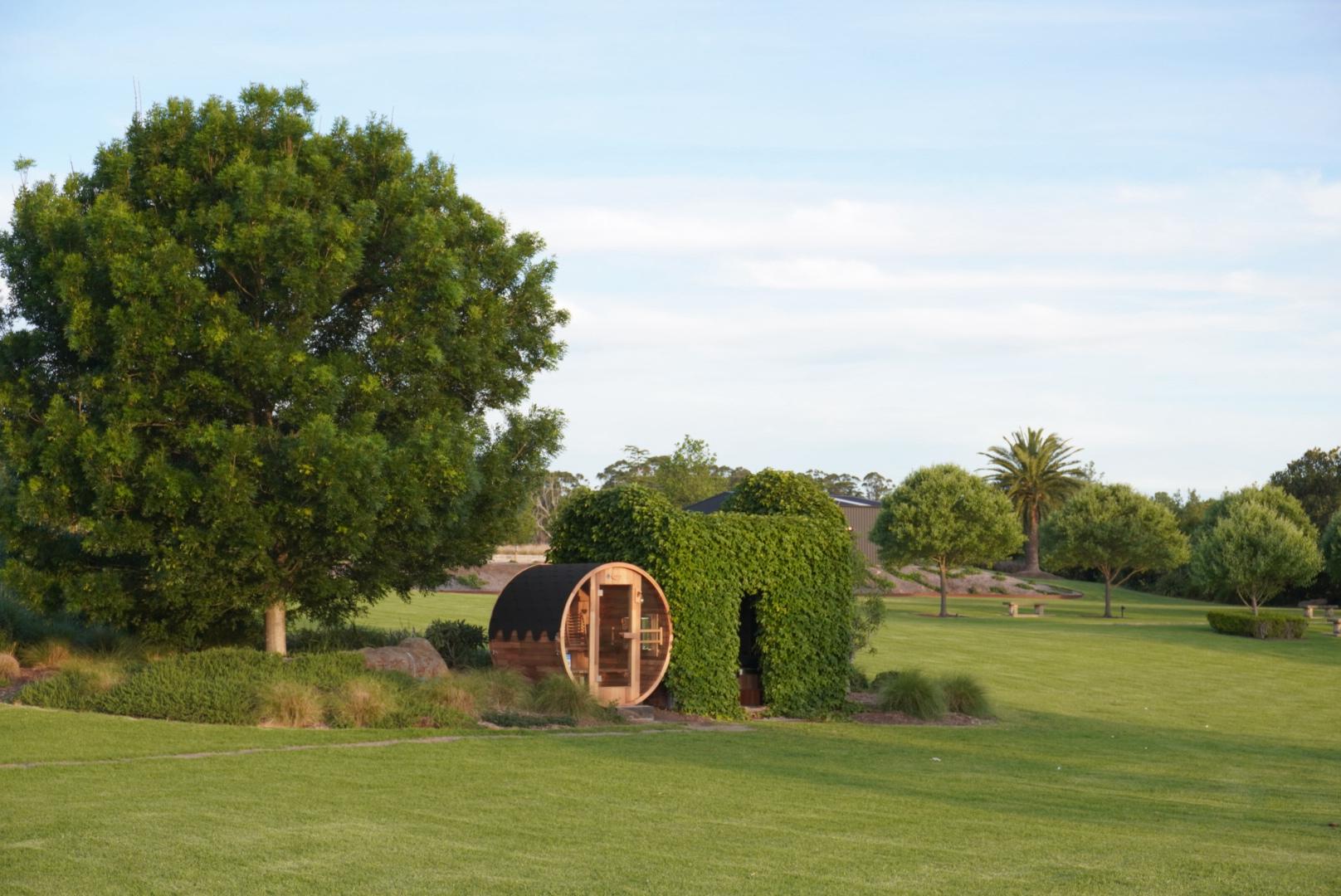
An outdoor sauna and cold plunge can turn an unused corner of your backyard into a dedicated wellness space — one you can use before work, after training, on the weekend or whenever you need to reset.
At Elevate Saunas, we believe wellness doesn't need to be complicated.
Heat. Cold. Breathe. Repeat.
Make it part of everyday life.
Important: This article is for general educational purposes and isn't medical advice. Sauna and cold-water immersion can place significant stress on the cardiovascular system. If you have a medical condition, take medication, are pregnant, or are unsure whether heat or cold exposure is appropriate for you, consult a qualified healthcare professional before beginning a routine.